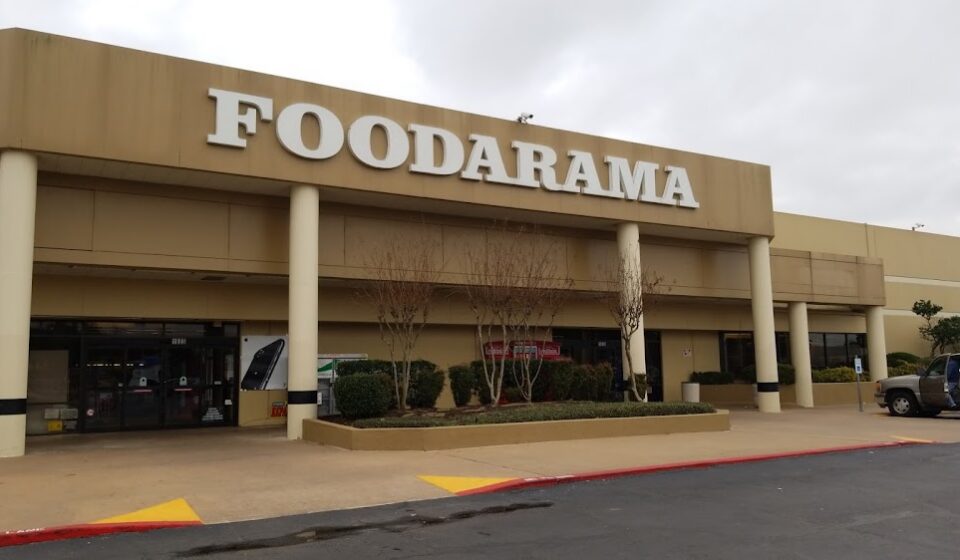

Foodarama #21 received a score of 17 during a May 27 routine inspection, placing the south Houston grocery store 70 points below the citywide average score of 87.
The store, located at 15915 S Post Oak Road, was cited for 20 violations during the inspection, including seven critical violations, two major violations and 11 minor violations. Four items were corrected on site.
Foodarama is a locally owned, Texas-based grocery chain that opened its first store in 1973. The company operates several stores in Houston and surrounding areas. Its South Post Oak No. 21 location is listed by the company at 15915 S Post Oak Road.
The May 27 score was the lowest listed for the store since 2024. Foodarama #21 scored 82 on March 1, 2024, 82 on Feb. 4, 2025, and 39 on Oct. 20, 2025.
The latest score continued a sharp downward trend in the inspection record. The store had four minor violations in March 2024 and four minor violations in February 2025. Inspectors later cited 19 minor violations in October 2025 before documenting 20 violations in the May 27 inspection.
The critical violations listed May 27 included unsafe or contaminated food not properly discarded, expired or improperly marked ready-to-eat food not discarded, equipment material that allowed contamination or unsafe migration, toxic materials not stored separately from food, an inadequate backflow prevention air gap, raw and ready-to-eat foods not properly separated and food-contact surfaces not cleaned and sanitized at the required frequency.
Four critical items were corrected on site, including unsafe or contaminated food not properly discarded, expired or improperly marked ready-to-eat food not discarded, equipment material concerns and toxic materials not stored separately from food.
Those violations can carry added concern in a grocery or market setting because customers may buy food to take home rather than eat it immediately. Problems involving expired ready-to-eat food, contaminated food, raw food separation and unclean food-contact surfaces can increase the risk that unsafe products remain available for sale or that bacteria move between foods, equipment or storage areas.
Raw and ready-to-eat food separation is a basic food safety requirement. Raw meat, seafood or poultry can contaminate foods that may not be cooked before eating if they are stored or handled improperly.
The report also cited food-contact surfaces not being cleaned and sanitized at the required frequency. In a grocery setting, those surfaces can include cutting boards, prep counters, slicers, utensils, containers and other equipment used in departments that handle food.
The inspection listed two major violations. One involved a blocked, inaccessible or improperly used hand-washing sink. The other involved damaged, spoiled, recalled or return products not being segregated in a designated area away from food, equipment, utensils, linens and single-use items.
Hand-washing sink access is important because employees need sinks available during food handling, cleaning and preparation. Returned, damaged or recalled products also must be kept separate so they are not mistaken for items that can be sold or used.
The minor violations included food handler training requirements, missing employee health reporting signs by hand-washing sinks, insufficient cooling, heating or holding capacity, unlabeled food storage containers, evidence of pests or inadequate pest control, improperly stored cleaned equipment or utensils, unclean equipment or utensils, a grease interceptor not evacuated at the required frequency, a toilet room door issue, mops not properly air-dried and no designated employee eating or drinking area.
Several of those issues also appeared in earlier inspections.
The Oct. 20, 2025, inspection, which resulted in a score of 39, cited 19 minor violations. Those included pest-control problems, outside openings not protected against insects, dead or trapped pests not removed often enough, walls and floors not maintained or cleaned properly, no food temperature measuring device, no sanitizer test kit, missing hand-washing signage and toilet-room door issues.
Earlier inspections in 2024 and 2025 were less severe but included some of the same maintenance and sanitation themes. The March 1, 2024, inspection cited walls or ceilings not maintained in good repair, equipment material concerns, waste container drain plug issues and unshielded light bulbs. The Feb. 4, 2025, inspection cited missing inspection-report signage, refrigeration thermometer issues, equipment cleaning-frequency problems and a toilet-room door issue.
The May 27 inspection report does not state that the store was closed. Restaurant and food establishment inspections reflect conditions observed at the time of inspection and may not represent current conditions.